
J Medical Aesthetics · Toorak, Melbourne
Rejuran in Melbourne – Skin Healing and Regeneration
Consultation First
Anatomy-Led Approach
Honest Outcomes
Medical-Grade Clinic
About this treatment
Most aesthetic treatments work on the skin’s surface or prompt a response through external stimulus. Rejuran works differently, helping restore the skin’s capacity to repair and regenerate itself from within.
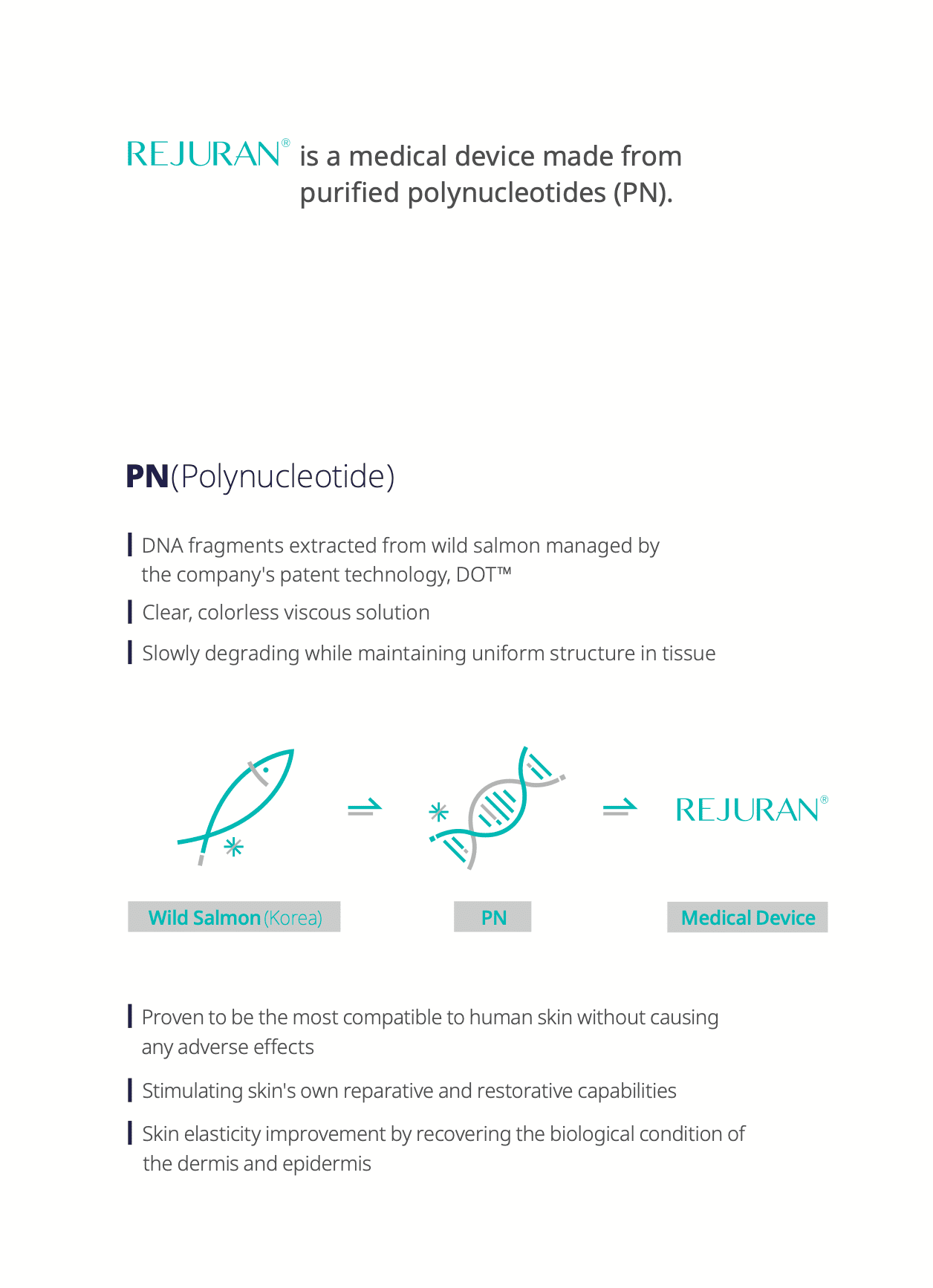
Rejuran is a polynucleotide (PN) treatment derived from wild salmon DNA, developed by PharmaResearch in South Korea using proprietary DOT™ (DNA Optimising Technology). Rather than adding volume, relaxing muscles, or resurfacing the skin, Rejuran delivers bio-active DNA fragments directly into the dermis that support cellular repair, stimulate collagen production, and restore the skin’s fundamental physiological condition. The mechanism is regenerative, working with the skin’s own biology rather than imposing an external change.
At J Medical Aesthetics in Toorak, Rejuran is one of the most requested treatments for patients who want to improve overall skin health, quality, and resilience rather than a single structural concern. Rejuran results speak to a different category of skin improvement, one that is gradual, cumulative, and reflective of healthier skin, not just better-looking skin.
What Are Polynucleotides and How Does Rejuran Work?
Polynucleotides, the active ingredient in Rejuran, are long chains of nucleotide molecules that form the structural basis of DNA. The polynucleotides used in Rejuran are derived from wild salmon DNA and processed using PharmaResearch’s DOT™ technology to produce highly purified, bio-compatible fragments of a specific size optimised for skin regeneration.
When administered into the dermis, these PN fragments interact with fibroblast cells, which are the cells responsible for producing collagen, elastin, and the extracellular matrix that gives skin its structure and resilience.
The polynucleotides stimulate fibroblast activity, supporting the production of new collagen and restoring the extracellular matrix that degrades with age and environmental damage. They also have documented anti-inflammatory properties, which may benefit sensitised or reactive skin.
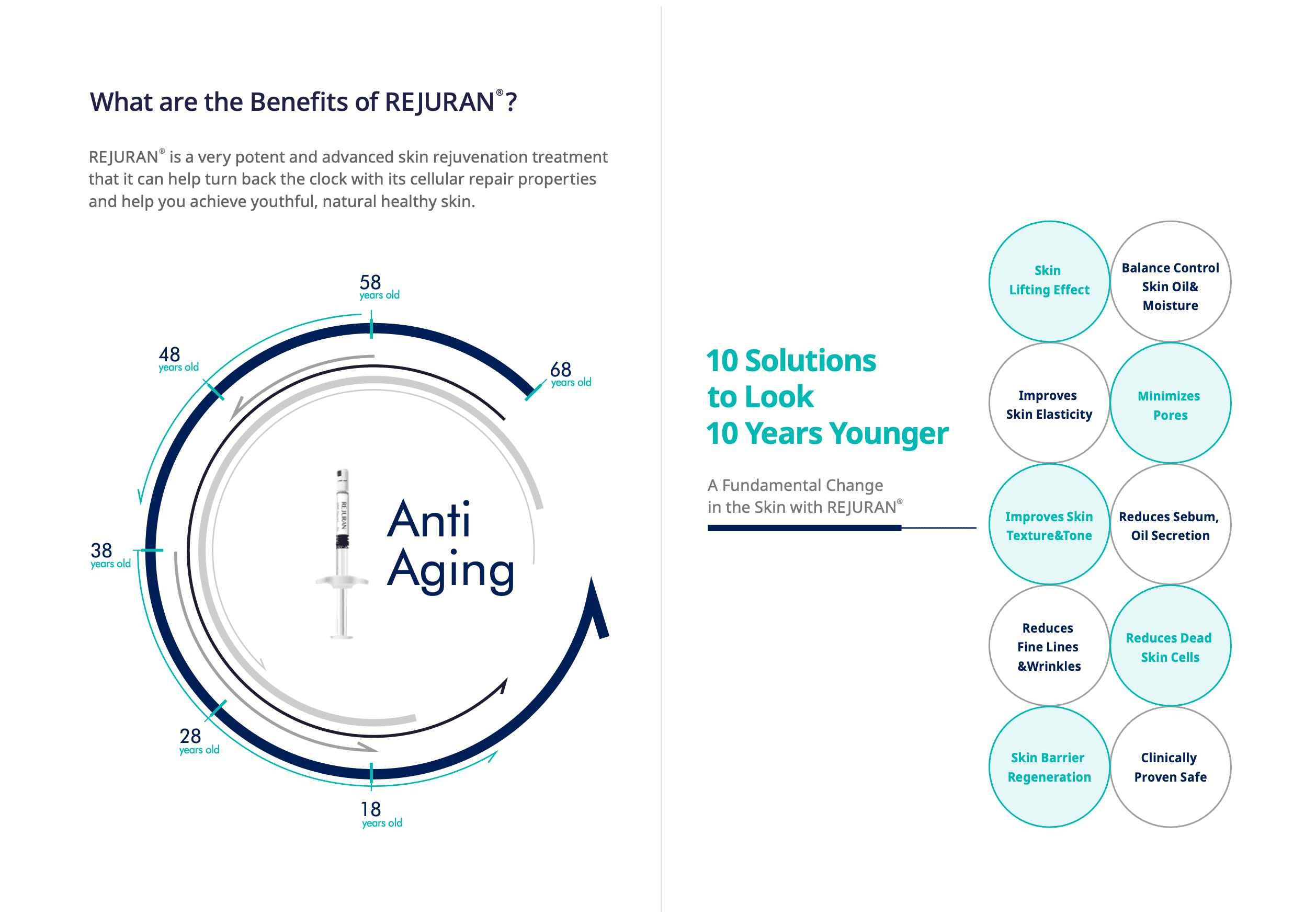
The treatment is designed to work across multiple areas of skin quality: supporting elasticity and firmness, helping reduce the appearance of fine lines, improving tone and texture, and refining the appearance of pores and redness, reflecting cellular regeneration rather than surface correction.
Rejuran results are cumulative, each session builds on the last as the skin’s regenerative capacity is progressively restored. Most patients notice meaningful improvement over a full initial protocol, with results continuing to develop in the weeks following the final session, though individual results and timelines vary.

Rejuran Treatments at J Medical Aesthetics
The Rejuran range includes several formulations, each optimised for a specific treatment application:
Rejuran Healer (Classic)
The original and most versatile formulation. Suitable for whole-face treatment across all areas, including the forehead, periorbital area, cheeks, jawline, neck, décolletage, and hands. Addresses overall skin quality, elasticity, fine lines, pore size, redness, and texture. The primary choice for patients seeking comprehensive skin health improvement.
Rejuran i
A specially formulated variant with a lower viscosity specifically designed for the periorbital area, this is the thin, sensitive skin around the eyes, including crow’s feet, under-eye hollows, and the eye contour. The standard Healer formulation is too dense for this delicate area; Rejuran i is engineered to be both safe and effective in this specific zone.
Rejuran S
Formulated for scar treatment, both general scars and sunken or atrophic scarring, such as acne scars. Rejuran S works by restoring the dermal tissue in the scar bed, gradually improving scar depth and texture through cellular regeneration rather than surface resurfacing. It can be used as part of a broader acne scar treatment programme alongside other modalities.
At J Medical Aesthetics, the specific Rejuran variant, or combination of variants, is selected at consultation based on your skin concerns and the areas being treated.
What Rejuran Results Can Address
Rejuran results reflect the treatment’s broad regenerative mechanism. Patients undergoing a full protocol at J Medical Aesthetics can expect progressive improvement in:
Skin Elasticity and Firmness
Rejuran supports the restoration of the extracellular matrix and stimulates collagen production, helping improve the skin’s structural resilience and reducing the appearance of sagging or thin, lax skin.
Fine Lines and Superficial Wrinkles
Through fibroblast activation and collagen renewal, Rejuran progressively reduces the appearance of fine lines, particularly in areas such as around the eyes, forehead, and lips, where the skin is thin.
Skin Tone and Radiance
Rejuran can improve overall skin brightness and tone, addressing dullness and uneven complexion through cellular regeneration and improved skin physiology.
Pore Size and Skin Texture
Regular Rejuran treatment contributes to refined pore appearance and improved surface texture as collagen density increases over a course of treatments, and the skin’s structural integrity is restored.
Redness and Sensitivity
The anti-inflammatory properties of polynucleotides make Rejuran particularly suitable for patients with persistent redness, sensitivity, or skin that has been sensitised by other treatments. It is one of the few regenerative treatments suited to reactive skin types.
Acne Scarring (Rejuran S)
By stimulating cellular repair in the scar bed, Rejuran S can improve the depth and texture of atrophic acne scars over a course of treatment.
Thin and Damaged Skin
For patients whose skin has thinned with age or been damaged by sun exposure, repeated treatments, or other environmental factors, Rejuran’s cellular repair mechanism helps restore skin thickness and resilience.
Rejuran Results: What to Expect Over Time
Understanding the timeline of Rejuran results helps set realistic and accurate expectations:
During and immediately after treatment
Minor papules, mild swelling, and light redness at treatment points are normal and expected. These typically resolve within 24–48 hours. Some mild flaking or dryness may persist for a few days.
Weeks 1–3
The skin begins to respond to the polynucleotide stimulus. Improvement in hydration and a subtle improvement in skin tone are often the first changes patients notice.
Weeks 4–8
As collagen production increases and the extracellular matrix is progressively restored, more noticeable improvement in skin texture, elasticity, and fine lines becomes apparent.
Months 2–4
The full cumulative effect of the initial treatment course is visible, with Rejuran results showing significant improvement in overall skin quality, firmness, and tone.
Maintenance
To sustain and build on the improvements achieved, maintenance sessions every six months are recommended following the initial protocol.
DISCLAIMER: These timelines are indicative only – individual response to treatment, and the pace and extent of results, will vary from patient to patient.
Rejuran Treatment Protocol
An initial course of three to four Rejuran sessions, spaced two to three weeks apart, is recommended to achieve the full benefit of the treatment. This spacing aligns with the skin’s natural cell renewal cycle, allowing each session to build on the regenerative response initiated by the previous one.
Treatment is administered using fine-gauge needles, with the specific technique, needle or cannula, varying by area. A topical anaesthetic is applied prior to treatment to ensure comfort, and the session typically takes 30–60 minutes, depending on the areas being treated.
Rejuran vs Other Regenerative Treatments
Understanding where Rejuran sits within the regenerative treatment landscape helps clarify when it is the most appropriate choice.
Rejuran vs Exosomes
Exosomes treatment for the face uses stem cell-derived extracellular vesicles to deliver growth factors and signalling molecules that activate the skin’s regenerative pathways. Rejuran uses polynucleotides (DNA fragments) to support cellular repair and collagen production directly. Both are regenerative treatments operating through different biological mechanisms. They can be used together for a more comprehensive regenerative approach, or as alternatives depending on the patient’s primary concern.
Rejuran vs Skin Booster Treatments
Skin booster treatments, such as mesotherapy and Fillmed NCTF, deliver a blend of vitamins, amino acids, and hyaluronic acid to the skin for nutrition and hydration. Rejuran’s mechanism is cellular repair through polynucleotides, a different biological process. The two treatments are complementary: skin boosters address cellular nutrition; Rejuran addresses cellular repair capacity.
Rejuran vs Collagen Boosting Treatments
Collagen boosting treatments stimulate collagen production through a physical or biochemical scaffold mechanism. Rejuran stimulates collagen through the activation of fibroblast cells via polynucleotide delivery, a more directly cellular mechanism. For patients with significant structural concerns, collagen boosting treatments may be more appropriate; for patients whose primary concern is skin quality and cellular repair, Rejuran is often the more suitable choice.
Rejuran vs Skin Rejuvenation Laser
Skin rejuvenation treatment using laser technology stimulates collagen through a controlled thermal or light-based mechanism. Rejuran stimulates collagen through cellular signalling. The two approaches are complementary and are frequently used together in comprehensive skin rejuvenation programmes.
Your next step
Start with a Consultation
Rejuran results are meaningful, but they are most meaningful for the right patient with the right expectation of what the treatment delivers. At J Medical Aesthetics in Toorak, we assess your skin condition, concerns, and goals before recommending any treatment. If Rejuran is the right choice for you, we will explain exactly how it will be used, what realistic results look like over a full protocol, and how it fits within your broader skin health plan.
Book a consultation at our Toorak clinic and let’s build a plan that’s right for your skin.
Explore more
Related Treatments
Exosome cellular treatment
Learn more
Meso-therapy skinbooster by Toskani Spain
Learn more
Bio-stimulator
Learn more
Skin Rejuvenation Laser
Learn more
FAQs
Frequently Asked Questions
Still have a question about your treatment? Speak with our team before you book.
What is Rejuran and how does it work?
Rejuran is a polynucleotide (PN) skin regeneration treatment derived from wild salmon DNA, developed by PharmaResearch using proprietary DOT™ technology. When administered into the dermis, the PN fragments stimulate fibroblast cells to produce collagen and help restore the extracellular matrix, improving skin elasticity, texture, tone, and overall skin quality through cellular repair. Rejuran results reflect biological regeneration rather than surface correction.
What Rejuran results can I expect?
Over a full initial protocol of three to four sessions, most patients experience progressive improvement in skin elasticity and firmness, fine line reduction, improved skin tone and radiance, refined pore appearance, and reduced redness and sensitivity. Results are cumulative, each session builds on the last, and continues to develop for several weeks after the final session. Individual results vary, and our therapists will tailor your programme to your skin.
How many Rejuran sessions do I need?
An initial course of three to four sessions spaced two to three weeks apart is recommended. Following the initial protocol, maintenance sessions every six months sustain and build on the results achieved.
What is the difference between Rejuran Healer, Rejuran i, and Rejuran S?
Rejuran Healer is the original formulation for whole-face and body treatment. Rejuran i is a lower-viscosity formulation specifically designed for the delicate periorbital area around the eyes. Rejuran S is formulated for scar treatment, including atrophic acne scars. The appropriate variant, or combination, is selected at consultation.
Is Rejuran suitable for sensitive skin?
Yes. Rejuran’s anti-inflammatory properties make it one of the more suitable regenerative treatments for sensitive, reactive, or sensitised skin types. Patients who have experienced reactions to other treatments often tolerate Rejuran well. Suitability is confirmed at consultation based on your individual skin history.
Can Rejuran be combined with other treatments?
Yes. Rejuran pairs well with exosome therapy, mesotherapy, collagen boosting treatments, and laser skin rejuvenation as part of a comprehensive skin health plan. Your practitioner will advise on the most appropriate combination and sequencing based on your individual assessment.