
J Medical Aesthetics · Toorak, Melbourne
Exosome Cellular Treatment in Melbourne
Consultation First
Anatomy-Led Approach
Honest Outcomes
Medical-Grade Clinic
About this treatment
Exosome therapy represents one of the most exciting developments in regenerative aesthetics, and at J Medical Aesthetics, one of the treatments we are most frequently asked to explain.
The interest is well-founded. Exosomes work differently from most aesthetic treatments. Where other treatments add volume, relax muscles, or resurface the skin from the outside, exosome treatment works at a cellular level. It delivers signals that support the skin’s own repair and regeneration processes from within. The result is improvement in skin quality, texture, and resilience that reflects real biological change over an external correction.
At our Toorak clinic, exosome cellular treatment is offered as part of our broader regenerative medicine programme, a suite of treatments designed to support the skin’s natural biology rather than simply work around it.

What Are Exosomes?
Exosomes are nanoscale extracellular vesicles, which are tiny structures released naturally by cells as part of the body’s intercellular communication system. They carry a complex cargo of growth factors, proteins, lipids, and genetic material, including microRNAs, which they transfer between cells to help regulate tissue repair, inflammation response, and cellular regeneration.
In the context of aesthetic medicine, the exosomes used in treatment are typically derived from mesenchymal stem cells (MSCs), often from umbilical cord blood, adipose tissue, or Wharton’s Jelly, chosen for their high concentration of regenerative signalling molecules.
Once in the skin, these exosomes interact with resident skin cells and activate pathways that support collagen and elastin synthesis, lower oxidative stress and renew damaged or aged tissue.
This is not a theoretical mechanism. Peer-reviewed research shows that exosome-based treatments can increase collagen and elastin synthesis, lower oxidative stress, and suppress matrix metalloproteinases, the enzymes responsible for breaking down the skin’s structural proteins. The evidence base for exosomes in skin rejuvenation continues to grow, with multiple clinical studies now supporting their use as a credible regenerative treatment modality.
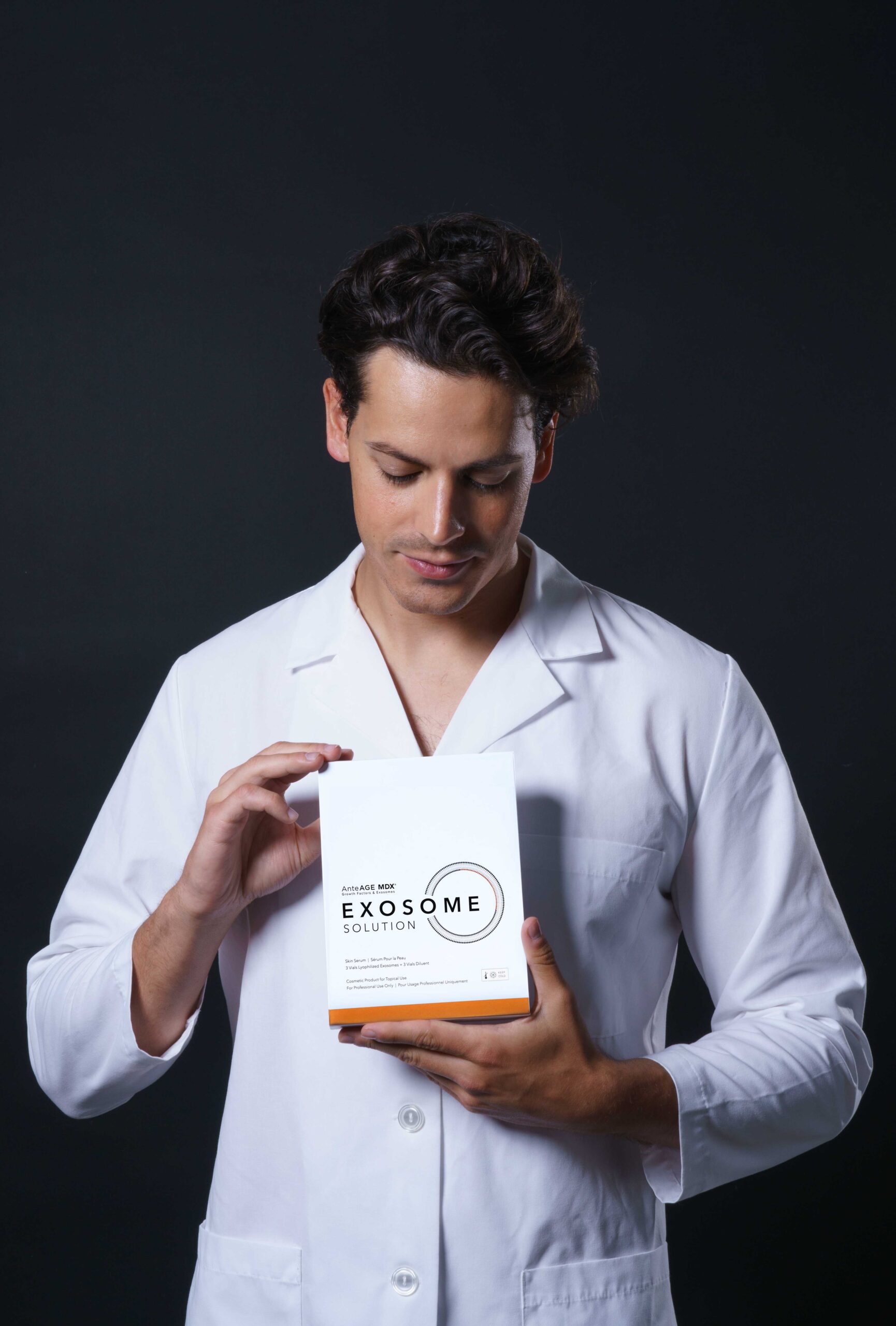
What Exosome Treatment Can Address
Exosomes treatment at J Medical Aesthetics is used to address a range of skin and hair concerns, with applications on the face and scalp.
Skin Ageing and Quality
Exosomes treatment for the face addresses the underlying cellular changes that drive visible skin ageing: declining collagen and elastin production, reduced skin cell turnover, and accumulated oxidative damage. Instead of masking these changes, exosome therapy supports the skin’s capacity to repair and renew itself, gradually improving skin texture, firmness, hydration, and overall radiance over the weeks after treatment.
Fine Lines and Skin Texture
By stimulating fibroblast activity and collagen production, exosome therapy can contribute to improvement in fine surface lines and textural irregularities, particularly those associated with skin thinning and cellular senescence, rather than deep structural volume loss.
Post-Treatment Recovery and Enhancement
One of the most established clinical uses of exosome treatment is to support recovery alongside other skin treatments, particularly microneedling, laser resurfacing, and chemical peels. Applied immediately following these treatments, exosomes amplify the skin’s regenerative response, improving outcomes and reducing recovery time. At J Medical Aesthetics, exosome therapy is frequently incorporated alongside laser skin rejuvenation for this reason.
Skin Damage and Pigmentation
Stem cell-derived exosomes have demonstrated the ability to restore skin physiological function and regenerate damaged skin tissue by lowering matrix metalloproteinase expression, increasing collagen and elastin production, and modulating intracellular signalling pathways. For patients with skin damage from UV exposure, acne scarring, or other sources of cellular damage, this regenerative activity can support meaningful improvement over a treatment course.
Hair Restoration
Exosomes derived from stem cells have demonstrated therapeutic effects on hair regrowth by delivering growth factor signals to hair follicle cells, supporting follicle regeneration and reactivating dormant follicles.
For patients experiencing hair thinning or early hair loss, exosome therapy for the scalp can be used as part of a tailored hair loss treatment programme at J Medical Aesthetics.
Exosome Therapy Delivery Methods
The effectiveness of exosome treatment depends in part on how the exosomes are delivered to the target tissue. At J Medical Aesthetics, delivery is selected based on the treatment area and the specific concern being addressed.
Microneedling with Exosome Application
The most common delivery method for exosomes treatment for the face. Microneedling creates controlled micro-channels in the skin through which the exosome solution is absorbed directly into the dermis. The microneedling stimulus also initiates its own collagen response, which the exosomes then amplify, producing a combined regenerative effect greater than either treatment alone.
Direct Administration
For targeted concerns, including scalp treatment for hair restoration or specific areas of the face, exosomes can be administered directly into the treatment zone, ensuring precise delivery to the target tissue.
Topical Application Post-Treatment
Following energy-based treatments such as laser resurfacing, exosomes can be applied topically to the treated skin surface, where the compromised barrier allows deeper absorption than would otherwise be possible. This application supports skin recovery and enhances the regenerative outcome of the primary treatment.
Exosome Therapy vs Other Regenerative Treatments
Knowing how exosome therapy compares with other regenerative treatments helps clarify when it is the right choice.
Exosomes vs PRP (Platelet-Rich Plasma)
PRP uses a concentration of the patient’s own platelets to deliver growth factors to the treatment area. Exosomes carry a broader and more complex cargo of signalling molecules than platelets alone, and because they are derived from stem cells rather than the patient’s own blood, their regenerative signalling content is not subject to variation based on the patient’s age or health status.
Exosomes vs Biostimulators
Biostimulators help stimulate collagen production through a physical scaffold or inflammatory response mechanism. Exosome therapy works through cellular signalling, activating the skin’s own regenerative pathways instead of triggering a response through tissue stimulation. The two approaches are complementary and are often used together in detailed skin rejuvenation plans.
Exosomes vs Mesotherapy
Mesotherapy in Melbourne delivers active ingredients to the skin’s surface layers to hydrate, brighten and improve surface texture. Exosome therapy works deeper at a cellular level, addressing the biological drivers of ageing rather than just the surface signs. They are often combined for a thorough approach to improving skin quality.
What to Expect from Exosome Cellular Treatment
Consultation
Every patient considering exosome therapy at J Medical Aesthetics begins with a thorough consultation. We assess your skin condition, concerns and goals, then tailor a treatment approach for you, including the delivery method and whether exosomes are used on their own or alongside another procedure.
Treatment
Treatment time varies depending on the delivery method and areas being treated. Microneedling with exosome application typically takes 45–60 minutes. There is minimal downtime, some redness and mild sensitivity in the treated area is normal and generally resolves within 24–48 hours.
Results
Exosomes treatment produces gradual results as the skin’s regenerative processes are activated and new collagen production increases. Most patients begin to notice improvement in skin texture, radiance, and firmness within 2–4 weeks of treatment, with continued progress over 2–3 months. A course of 2–3 sessions is typically recommended for optimal results, spaced 4–6 weeks apart.
Your next step
Start with a Consultation
Exosome cellular treatment is a genuine step forward in non-surgical skin regeneration, but like all treatments at J Medical Aesthetics, it works best when it is the right choice for the right patient. At our Toorak clinic, we assess your skin and discuss your concerns and goals before recommending any treatment. If exosome therapy is appropriate, we will explain how it will be used, what to expect, and how it fits into your wider skin health plan.
Book a consultation at our Toorak clinic and let’s build a plan that’s right for your skin.
Explore more
Related Treatments
Regenerative Medicine
Learn more
Hair loss program
Learn more
Meso-therapy skinbooster by Toskani Spain
Learn more
Bio-stimulator
Learn more
FAQs
Frequently Asked Questions
Still have a question about your treatment? Speak with our team before you book.
What are exosomes, and how do they work in skin treatment?
Exosomes are nanoscale extracellular vesicles produced naturally by cells to communicate with each other. They carry growth factors, proteins, and genetic material that regulate tissue repair and regeneration. In aesthetic medicine, exosomes derived from stem cells are applied to the skin to activate its collagen production, support cellular repair, and gradually improve overall skin quality over time.
What is the difference between exosome therapy and PRP?
Both use biological materials to deliver regenerative signals to the skin. PRP uses growth factors derived from the patient’s own platelets. Exosome therapy uses extracellular vesicles derived from stem cells, which carry a broader range of regenerative signalling molecules and are not subject to variation based on the patient’s own biological status. The two treatments can be used together or as alternatives, depending on the patient’s presentation and goals.
How many sessions of exosome treatment are needed?
Most patients undertaking exosome therapy for skin rejuvenation benefit from a course of 2–3 sessions spaced 4–6 weeks apart, with results continuing to improve over 2–3 months following the final session. For hair restoration, we’ll discuss the frequency and number of sessions needed as part of a broader hair loss treatment plan. Your practitioner will outline the appropriate course at consultation.
Is exosome treatment painful?
When delivered via microneedling, the treatment involves the same level of sensation associated with standard microneedling. Topical numbing is applied beforehand to improve comfort. When delivered directly into the skin, the procedure is well-tolerated. Post-treatment redness and sensitivity typically resolve within 24–48 hours.
Can exosome therapy be combined with other treatments?
Yes, and it’s one of the most valuable ways to use it. Exosomes treatment is particularly effective when used alongside laser resurfacing, microneedling, biostimulators, and mesotherapy as part of a complete skin regeneration plan. Your practitioner will advise on the most appropriate combination and how they are planning to sequence your treatments.
Is exosome therapy safe?
Exosomes derived from screened stem cell sources have demonstrated a favourable safety profile in clinical research to date. As with any aesthetic treatment, we conduct a thorough consultation and medical history review before treatment to ensure it is appropriate for you. Your practitioner will discuss any relevant considerations at your initial appointment.