
Acne scars
Causes, Triggers and Modern Management Options
Acne Scar Treatment Melbourne
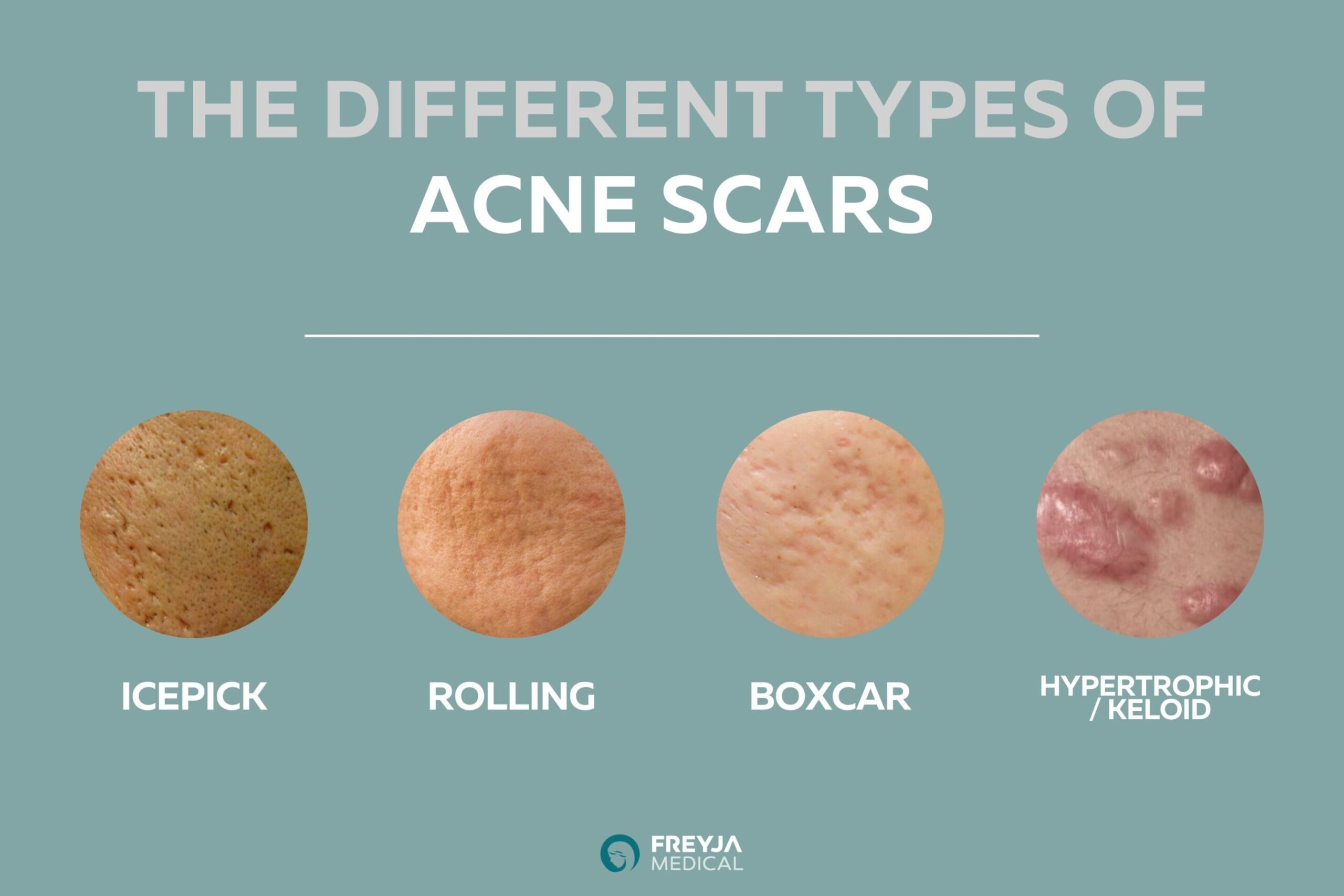
Acne scars develop when inflammation from acne damages the deeper layers of the skin. When the healing process is disrupted—due to severe inflammation, infection, or delayed treatment—the skin may not regenerate collagen effectively. This results in permanent textural changes such as dents, pits, or uneven skin surface. Not everyone with acne will develop scars, but the risk increases with certain factors. Understanding your acne scar type is essential, as different scars respond best to different treatments.
Types of Acne Scars
Ice Pick Scars
Ice pick scars are deep, narrow, and sharply defined, resembling tiny puncture marks or enlarged pores. They extend deep into the dermis, making them the most challenging acne scar type to treat.
Common features:
Small surface opening
Deep and narrow scar tract
Most commonly found on the cheeks
Boxcar Scars
Boxcar scars are wider than ice pick scars and have clearly defined edges. They can be shallow or deep and often create a crater-like appearance on the skin.
Common features:
Round or oval depressions
Sharp borders
Frequently seen on cheeks and temples
Rolling Scars
Rolling scars are broad, shallow depressions caused by fibrous bands pulling the skin downward. They create a wavy or uneven skin texture, often more noticeable under angled lighting.
Common features:
Wide and shallow scars
Soft, rolling appearance
Often occur in clusters
What Causes Acne Scars?
Acne scarring occurs when inflammation damages collagen and elastin in the dermis.
Risk factors include:
Severe or cystic acne
Repeated picking or squeezing of lesions
Delayed or inadequate acne treatment
Genetic predisposition
Early and appropriate acne management plays a critical role in reducing the risk of permanent scarring.
How Acne Scar Treatments Work
Professional acne scar treatments focus on stimulating collagen remodelling. Scarred skin contains disorganised or insufficient collagen. Clinical treatments create controlled micro-injuries or thermal stimulation, encouraging the skin to repair itself and gradually improve texture over time. Because collagen regeneration is a slow biological process, multiple treatment sessions are usually required for visible and lasting improvement.
In-Clinic Acne Scar Treatment Options
Microneedling with Mesotherapy
Microneedling creates micro-channels in the skin that stimulate collagen and elastin production.
When combined with injectable-grade skin boosters, treatment can be tailored to address:
Hydration
Acne-prone skin
Pigmentation
Skin regeneration
Fine lines and overall skin quality
Best suited for:
Mild to moderate acne scars and overall texture improvement.
Alma Opus RF Plasma Treatment
Alma Opus RF Plasma is an advanced radiofrequency resurfacing treatment that delivers RF energy deep into the skin while plasma micro-sparks resurface the surface layers.
Benefits include:
Strong collagen and elastin stimulation
Improvement in acne scars, fine lines, and uneven texture
More intensive resurfacing compared to traditional microneedling
Best suited for:
Moderate to severe acne scars and skin resurfacing.
ClearSkin Laser (1540 nm Erbium Glass Laser)
ClearSkin is a non-invasive fractional laser designed to treat both active acne and early scarring.
How it works:
Penetrates the dermis to stimulate collagen remodelling
Helps reduce oil production and acne-causing bacteria
Uses vacuum-assisted delivery to treat active breakouts
Best suited for:
Active acne, early acne scarring, and acne prevention.
TCA CROSS Treatment
TCA CROSS is a targeted chemical technique specifically used for deep ice pick scars.
How it works:
High-concentration trichloroacetic acid (TCA) is applied directly into the scar
Creates a controlled chemical injury within the scar walls
Stimulates collagen production and gradually elevates the depth of the scar
Best suited for:
Deep ice pick acne scars.
How Many Acne Scar Treatment Sessions Are Needed?
The number of sessions depends on:
Scar type and depth
Overall skin condition
Treatment modality used
On average:
4–6 treatment sessions are recommended
Sessions are spaced 4–6 weeks apart
Collagen remodelling continues for several months after treatment, so patience and consistency are key.
Skincare to Support Acne Scar Treatment
Professional treatments are most effective when supported by appropriate skincare.
Key Ingredients Include:
Retinoids (Vitamin A): Stimulate collagen and skin renewal
Salicylic Acid: Helps prevent new breakouts
Niacinamide: Reduces inflammation and supports the skin barrier
Vitamin C: Supports collagen synthesis and brightens skin
Sunscreen Is Essential
Daily broad-spectrum sunscreen is critical during acne scar treatment.
UV exposure can:
Break down collagen
Worsen scar appearance
Increase post-inflammatory pigmentation
Reducing active acne inflammation also helps prevent new scars from forming.
Acne Scar Treatment Consultation in Melbourne
At J Medical Aesthetics, acne scar treatment plans are personalised based on scar type, skin condition, and individual skin goals. Using advanced medical-grade technologies and evidence-based treatments, we focus on collagen remodelling, texture improvement, and long-term skin health.